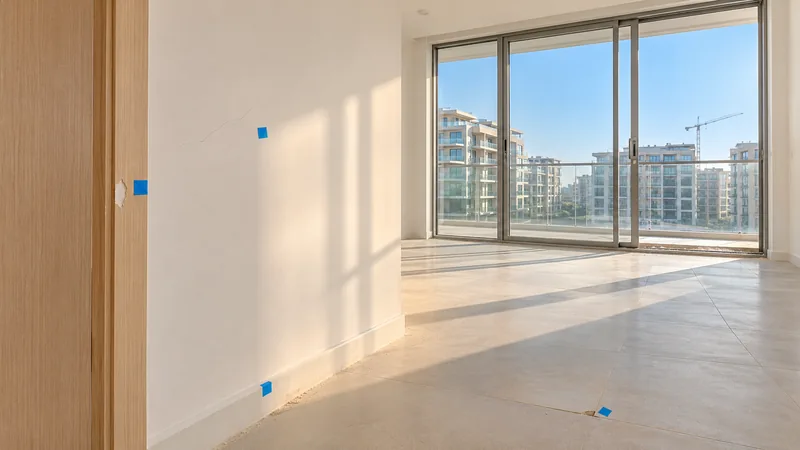
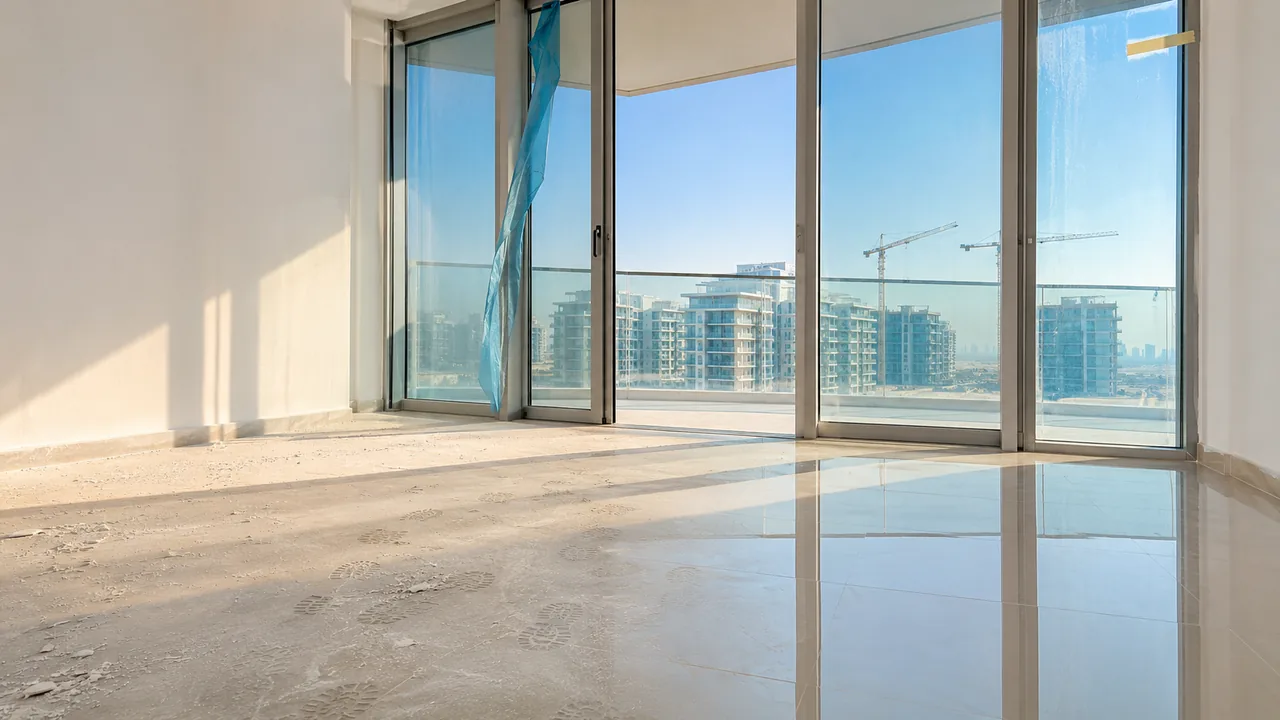
Post-construction cleaning is the work that takes a new or renovated property from the state the last trade left it in to a state someone can inspect, sign for and live in. In Dubai it covers construction dust on every surface; paint, cement, grout, silicone and adhesive residue; protective film; glass inside and out; and the fittings a buyer touches first. It is done in three stages: a builders' clean while the trades are finishing, a final clean of every surface once they have gone, and a touch-up clean in the day or two before the keys change hands.
The three stages at a glance
| Stage | When it happens | What it removes | Finished when |
|---|---|---|---|
| 1. Builders' clean | As the main works finish, with trades still on site | Debris, offcuts, packaging, loose dust and the worst of the splashes | Floors can be walked and surfaces can be seen |
| 2. Final clean | After the last trade leaves, with water and power on | Fine dust from every surface, ceiling to skirting; residue on tile, stone, metal and glass; protective film; the inside of every cabinet and fitting | Every surface passes a close look in daylight |
| 3. Touch-up clean | After the snag repairs, a day or two before handover or move-in | Dust put back by repairs and by the air conditioning, fingerprints, marks left by the snagging team | The unit is ready for the walk-through |
Skipping a stage does not save the work. It moves it. A final clean done while painters are still on site has to be done again, and a unit handed over without a touch-up clean shows the snagging team's footprints.
Why this matters in Dubai in 2026
2026 is a heavy handover year. Cushman & Wakefield's third-quarter residential report puts deliveries at nearly 12,900 units in the third quarter of 2026 and about 40,400 for the first nine months. It expects about 50,900 for the full year, around 9% more than 2025, and has about 60,000 scheduled for 2027.
The new homes are not spread evenly. In the Dubai Land Department's project registry, as compiled month by month by Real Estate Club Dubai, Jumeirah Village Circle and Business Bay have taken the most completed units in 2026, with Downtown Dubai, Dubai Hills Estate, Sobha Hartland, Dubai Creek Harbour, Al Furjan and newer villa communities such as Damac Lagoons and Arabian Ranches 3 handing over too. Sharjah has its own handovers, at Arada's Aljada among others.
The same Cushman & Wakefield report warns that limited contractor capacity and supply-chain constraints have pushed some handovers into 2027. That matters for anyone booking a clean. When handovers slip and then bunch together, so do inspection dates, and a clean booked in the same week as the inspection is a clean done in a hurry. The time to book is when the snagging date is set, not when the keys arrive.
Who books a post-construction clean, and whose job it is
On a construction contract, clearing up is the contractor's obligation. Sub-Clause 4.23 of FIDIC's 1999 Conditions of Contract, the standard form behind many building contracts in the region, says (the 2010 MDB edition uses the same words):
Upon the issue of a Taking-Over Certificate, the Contractor shall clear away and remove, from that part of the Site and Works to which the Taking-Over Certificate refers, all Contractor's Equipment, surplus material, wreckage, rubbish and Temporary Works. The Contractor shall leave that part of the Site and the Works in a clean and safe condition.
Dubai Municipality's Code of Construction Safety Practice sets the same expectation while the work is going on: "Workplace shall regularly be kept clean and all construction wastes such as cement bags, wood and aluminum rubbish, etc. shall be removed".
"Clean and safe" in a construction contract describes the builders' clean: the rubbish gone, the equipment out, nothing left that could hurt anyone. It does not describe the standard a buyer expects when they open a kitchen cupboard. That gap is why the final clean is often a separate line, and three kinds of client book it:
- The main contractor or fit-out contractor, presenting the building or unit for inspection.
- The developer or property manager, handing units over to buyers, often unit by unit across a tower.
- The owner of a new villa or apartment, who finds dust in the tracks, film on the frames and grout haze on the floor of a unit described as cleaned.
Who pays is a question for the paperwork. Read the construction contract, or the sale and purchase agreement, for the cleaning and handover clauses before assuming it is someone else's job.
Stage 1: the builders' clean
The builders' clean takes a site from rubble to dust. Debris, offcuts, packaging and loose dust go. Nothing is polished yet, because the trades are still working and anything polished now will be dusty again tomorrow.
The method matters more than it looks. Construction dust is not household dust. The UK Health and Safety Executive, whose construction dust guidance is one of the most detailed public references, notes that silica "is also a major constituent of construction materials such as bricks, tiles, concrete and mortar", and it is blunt about the broom:
Dry sweeping concrete dust and other building debris can produce high levels of dust. Avoid dry sweeping where possible because this can be high risk.
For removing small rubble, dust and debris, its construction dust sheet lists "Vacuum attachments fitted to an H or M Class extraction unit", and it warns that dust raised by dry brushing "will re-settle sometime later and the floor will have to be cleaned again." A domestic vacuum is not built to hold the finest dust and can pass it back into the room.
The working order for this stage:
- Debris and packaging out first, so nothing is dragged across a finished floor.
- Vacuum, top to bottom, with an H- or M-class extraction vacuum. Where a brush is used for small amounts, damp the dust down first.
- Floor protection stays on wherever trades are still working. Protective film on frames and panels is the exception: makers want it off soon after installation, before the sun bakes it on.
- Note the residue for the final clean.
Stage 2: the final clean
The final clean is what most people mean by post-construction cleaning: every surface, ceiling to skirting, inside and out, brought to the standard a buyer or tenant expects to walk into. It starts at the top of the room and works down, because everything above the floor sheds dust onto it.
| Area | What the final clean covers |
|---|---|
| Ceilings and high points | Light fittings, the faces of air conditioning grilles and diffusers, sprinkler heads, the tops of doors, frames, curtain boxes and wardrobes |
| Walls and skirting | Dust wiped from every wall face; paint drips and adhesive taken off skirting, sockets and switch plates |
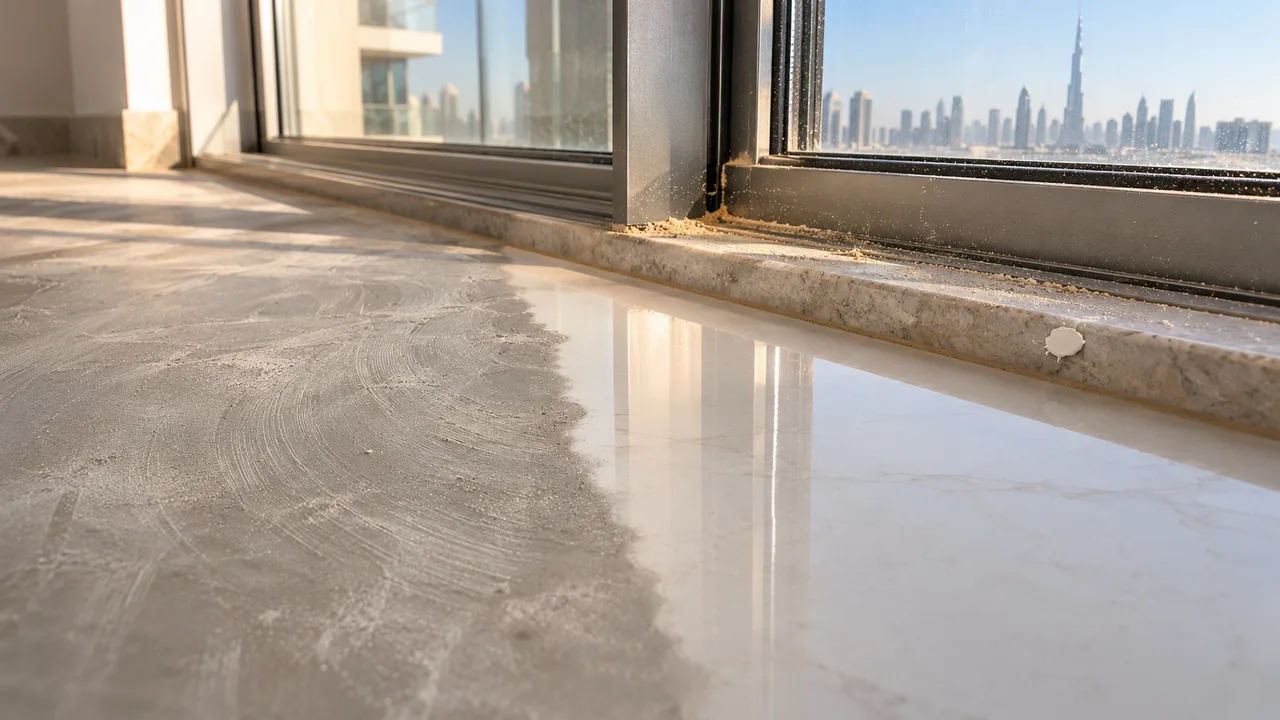
| Glass and frames | Both faces of every pane, the frames, the sills and the sliding tracks; protective film and tape adhesive removed |
| Kitchen | Every cabinet and drawer inside and out, worktops, splashbacks, the hob, the hood and its filters, and appliances inside and out |
| Bathrooms | Sanitaryware, mixers and shower glass; grout haze off the tiles; silicone smears off fittings; mirrors; debris out of floor drains |
| Wardrobes and storage | Shelves, rails, drawers and the floor of every cupboard |
| Doors and ironmongery | Handles, hinges, locks, labels and stickers |
| Balconies and terraces | Glass balustrades, floor tiles, cement splashes and the drain outlets |
| Floors | Cleaned last, with the method chosen for the surface: porcelain, marble, timber and vinyl each take a different machine and product |
The faces of the air conditioning grilles are cleaning. What is inside the system is not: dust drawn in during construction is an air conditioning job, and AC cleaning and filter replacement are booked as maintenance.
Residues that need the right method
Most of the time in a final clean goes on residue rather than dust, and the wrong method on the wrong surface does damage that no amount of cleaning will undo. The manufacturers' own guidance is the best rulebook.
| Residue | Usually found on | The method | What to avoid |
|---|---|---|---|
| Cement and grout haze | Porcelain and ceramic tile | A cleaner made for cement residue after laying, worked in on wet tile and rinsed off | Using the same product on marble, limestone or travertine |
| Cement splashes and paint | Marble, limestone, travertine and other calcareous stone | Mechanical removal and a neutral cleaner | Acids of any kind, including vinegar and lemon |
| Paint, plaster and mortar | Glass | Wash off slurry as soon as it lands; soak and soften dried spots; only if that fails, a new one-inch blade, one direction, on small spots of uncoated, non-toughened glass | Scrapers on coated or toughened glass; scraping large areas; abrasives on any glass |
| Protective film and tape | Window frames, panels, glass, stainless steel | Peel it as soon as installation is finished | Leaving film in the sun for weeks |
| Silicone smears | Sanitaryware, tile, glass | Fresh smears lifted with a suitable solvent; cured silicone removed mechanically, with care | Abrasive pads on polished or brushed finishes |
What the manufacturers say behind each row:
- Tile. FILA's cement-residue cleaner is made for "post installation cleaning", diluted, left five to ten minutes and rinsed with plenty of water. The same sheet warns: "Do not use on acid sensitive stone such as marble, limestone, or travertine."
- Stone. The Natural Stone Institute explains why: "Calcium carbonate is sensitive to acidic solutions so mild, non-acidic cleaners are recommended", and "Products containing lemon, vinegar, or other acids may dull or etch calcareous stones." For paint on stone: "Do not use acids or flame tools to strip paint from stone."
- Glass. Guardian Glass, in its cleaning guide for coated glass, says "NEVER attempt to remove debris/ dirt from the glass by using a scraper or razor blade" and that "Concrete or mortar slurry that runs down (or is splashed on) glass can be especially damaging and should be washed off as soon as possible." The National Glass Association adds a warning about toughened glass: tiny particles from the tempering furnace can stick to its surface, and people who "attempt to scrape particles that can be felt, but not seen" very often "end up scratching and chipping the glass surface."
- Film. Guidance for aluplast window profiles says protective films "must be removed immediately after window installation on site" because they "may leave residues due to exposure to sunlight". A facade-panel maker gives a month as the outer limit. In Dubai's sun, sooner is better.
- Silicone. Sika's data sheet for a structural silicone sold in the UAE puts it simply for tools and equipment: uncured material can be removed with a suitable solvent, but "Once cured, the material can only be removed mechanically."
Stage 3: the touch-up clean
The touch-up clean happens after the snag repairs and just before the keys change hands. It exists because the final clean is never the last thing to happen in a new unit.
Three things put dust and marks back after a final clean. The snagging repairs themselves: a repainted wall, a replaced tile, a re-sealed shower tray. The air conditioning, which can blow out dust that settled in the ducts and grilles during construction once it runs in earnest. And deliveries: appliances, furniture and the packaging they arrive in.
The touch-up is lighter than the final clean: glass, floors, the kitchen and bathroom surfaces, and anything the repair teams touched. It should be the last visit before the handover walk-through, ideally a day or two before it.
Villas, apartments, towers and offices: what changes
The three stages are the same everywhere. What changes is the access, the glass and the order of work.
Villas and townhouses. More glass at height, in double-height living rooms, stair voids and glass balustrades, which needs high-access equipment rather than a ladder. More outside: terraces, roof terraces, driveways, covered parking, the maid's room and the external stone. A pool, if there is one, is its own job.
Apartments in a tower. The work runs through the building's rules: a lift booking, a loading bay, a permit from the building management, and set working hours. Inside the unit, the balcony glass and the inside faces of the windows are the cleaner's job. The outside faces of the upper-floor windows are cleaned from the building's own access equipment, by water-fed poles or drones where they reach, or by rope access, which Dubai Municipality's guideline limits to "specialist and certified companies and personnel", after "the most intrinsically safe means of access" has been considered first.
Whole towers for developers. A tower is cleaned floor by floor to a programme that follows the snagging teams, with the common areas (lobby, corridors, stairwells, car park, gym and pool deck) done last, once nobody needs to carry materials through them.
Offices and shops after fit-out. The same stages, with different surfaces: glass partitions, raised access floors, ceiling grids, kitchenettes and washrooms. Furniture often arrives before the final clean, and the soft furnishings need upholstery and fabric cleaning at the same time as the rest, so the dust is lifted once rather than twice. The commercial version has its own timing around inspections and landlord sign-off, set out in cleaning after an office or retail fit-out.
How long it takes, and what decides the price
A touch-up clean is a fraction of a final clean, and a one-bedroom apartment, a five-bedroom villa and a forty-floor tower are different jobs. Beyond that, both the time and the price depend less on floor area than on five things:
- The stage. Builders' clean, final clean or touch-up.
- The residue. A unit where the painters masked properly takes far less time than one with paint, cement or grout haze on every pane.
- The glass. How much there is, how high it is, and how it can be reached.
- Whether trades are still working. Cleaning behind a trade means cleaning twice.
- Water, power and access. Running water and power in the unit, a lift booking, and the hours the building allows work.
A quote should state the duration as well as the price; what decides a post-construction cleaning quote goes through each factor and how to compare two quotes. OUSIS quotes on WhatsApp from photographs and the details of the unit or project, and a clear quote usually comes back within the hour while it is open. Where the job needs a site visit, the price follows the visit.
How handover day works
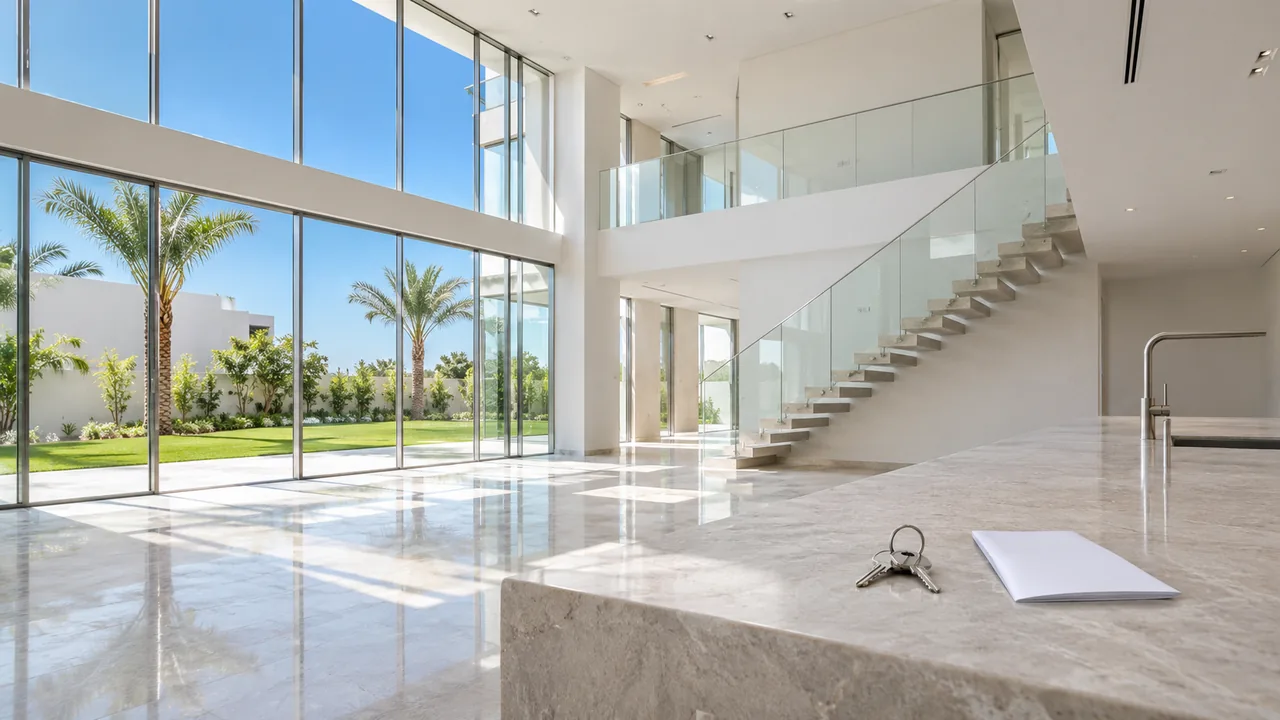
The details vary by developer, but a handover usually follows the same outline: the building receives its completion certificate, the developer sends a handover notice, the buyer settles the final payment and fees and inspects the unit, the snags are listed, and the keys are handed over, with repairs done before or after that day depending on the developer. The cleaning fits around those steps. The final clean comes before the inspection, so the inspector is looking at the finish rather than at dust. The touch-up comes after the repairs.
The date the keys change hands matters for more than moving in. Under Article 40 of Dubai Law No. (6) of 2019 on jointly owned property, the developer remains liable "for a period of one (1) year from the date of handover of the Unit to the Owner, for repairing or replacing defective installations", which the law describes as "mechanical and electrical works, sanitary and sewerage installations, and similar installations". Structural defects carry a separate ten-year liability from the date of the completion certificate. A clean unit is easier to inspect: a hairline crack, a chipped tile or a weeping joint is hard to see under a film of dust.
The handover checklist
Walk the unit in daylight, with every light on, and look along surfaces from a low angle rather than straight at them. Dust and haze show at an angle that a straight look misses.
- Glass, both faces, looked at against the light: no haze, no streaks, no paint spots, no scratches.
- Frames and sliding tracks: no film, no adhesive, no dust packed in the corners of the tracks.
- Floors, at a low angle: no cement or grout haze, no paint, no adhesive.
- Inside every cupboard, drawer and wardrobe, including the top shelf.
- High points: the tops of doors, frames and wardrobes, the light fittings and the faces of the air conditioning grilles.
- Sanitaryware and mixers: no silicone smears, no labels, no scratches under the labels.
- Grout lines in the bathrooms and on the kitchen splashback.
- Drains: floor drains and the balcony drain outlets free of debris.
- Skirting, sockets and switch plates: no paint, no dust.
- Appliances, inside and out: no packaging, no film, no dust in the oven or the dishwasher.
- Balconies and terraces: the glass and the floor.
Then photograph every room in the same light, with the date on the files. The reasoning is the same at handover as at move-out: dated photographs settle questions about condition far better than anyone's memory, and the one-year clock on installations starts on handover day, which is the day to take them.
Post-construction cleaning with OUSIS
OUSIS is a professional cleaning and property services company working across Dubai and Sharjah. It handles post-construction and handover cleaning, deep cleaning, move-in and move-out cleaning, villa and building cleaning, commercial cleaning, upholstery and fabric cleaning and property maintenance for contractors, developers, property managers and owners. It covers all of Dubai, including Dubai Hills Estate, Jumeirah Village Circle, Business Bay, Downtown Dubai, Dubai Marina and Palm Jumeirah, and Sharjah, seven days a week. OUSIS is rated 4.9 on Google.
Post-construction cleaning is the first service on that list. Teams bring all supplies and equipment; the kit includes professional vacuum systems for construction dust, monobrush and steam machines for stone, tile and grout, and water-fed pole systems for high glass. The post-construction cleaning service page sets out the scope and how a project runs, and the Dubai Hills Estate guide covers one of the busiest handover communities.
Questions people ask
What does post-construction cleaning include?
Post-construction cleaning removes what a building project leaves behind: construction dust on every surface from ceilings to skirting; paint, cement, grout, silicone and adhesive residue; protective film on frames and glass; and debris in tracks and drains. It covers glass inside and out, every cabinet, appliance and fitting inside and out, and floors cleaned with a method suited to the surface. It runs in three stages: a builders' clean, a final clean and a touch-up clean before handover.
How long does post-construction cleaning take in Dubai?
A touch-up clean is a fraction of a final clean, and beyond that the time depends less on floor area than on five things: the stage, how much paint, cement and silicone the trades left, how much glass there is and how it can be reached, whether trades are still working, and whether the unit has water, power and a lift booking. A quote should state the duration alongside the price before the work is booked.
Is post-construction cleaning the contractor's job or the owner's?
On a construction contract, clearing up is the contractor's duty. Sub-Clause 4.23 of FIDIC's 1999 Conditions of Contract requires the contractor to remove equipment, surplus material and rubbish and leave the works in a clean and safe condition. That describes a builders' clean, not the standard a buyer expects, so the final clean is often a separate line booked by the contractor, the developer or the owner. The contract or the sale and purchase agreement decides who pays.
What is the difference between a builders' clean and a final clean?
A builders' clean takes a site from rubble to dust: debris, offcuts, packaging and loose dust go, using extraction vacuums rather than dry sweeping, while floor protection stays on. A final clean comes after the last trade leaves and brings every surface to handover standard: fine dust off ceilings, walls and fittings, residue off tile, stone, metal and glass, film removed, and the inside of every cabinet and appliance cleaned.
Can I move in before the post-construction clean?
You can, but it makes the clean harder and less complete. Furniture covers floors and walls that still carry dust, and sofas, mattresses, curtains and rugs absorb it. The better order is a final clean before the snag inspection, then the repairs, a touch-up clean, and the furniture last. If the unit was handed over without a proper clean, book one after the repairs and before the furniture arrives, and have any soft furnishings already in the unit cleaned in the same visit.
Who is responsible for defects after handover in Dubai?
Under Article 40 of Dubai Law No. (6) of 2019 on jointly owned property, the developer is liable for one year from the date the unit is handed over for repairing or replacing defective installations, such as mechanical, electrical, sanitary and sewerage works. Structural defects carry a ten-year liability from the date of the completion certificate. Any agreement that contradicts the article is void.
Sources
- Cushman & Wakefield: Dubai Residential MarketBeat, Q3 2026 (29 October 2026)
- Real Estate Club Dubai: Dubai handovers, monthly completions compiled from the Dubai Land Department project registry (2026)
- Zawya: Arada hands over first homes at Vida Residences Aljada
- FIDIC Conditions of Contract (1999), Sub-Clause 4.23 Contractor's Operations on Site, in the MDB Harmonised Edition (June 2010) published by the Asian Development Bank
- Dubai Municipality: Code of Construction Safety Practice (2026)
- UK Health and Safety Executive: Construction dust, dry sweeping (updated 12 November 2024)
- UK Health and Safety Executive: Construction dust, CIS36 revision 3 (2020)
- UK Health and Safety Executive: Silica dust (updated 7 February 2025)
- FILA: Deterdek technical data sheet, revision 03 (July 2024)
- Natural Stone Institute: Care and Cleaning of Natural Stone (2019)
- Guardian Glass: SunGuard HD cleaning instructions (2022)
- National Glass Association: Glass Technical Paper FB02-02, Heat-Treated Glass Surfaces are Different (2023)
- Starke and aluplast: cleaning and protection tape on window profiles (2024)
- PREFA: protective film on facade panels
- Sika UAE: Sikasil SG-20 S product data sheet, version 05.01 (May 2024)
- Dubai Municipality: Technical Guidelines for Usage of Rope Access System, DM-HSD-GU35, version 5 (22 July 2025)
- Dubai Government Legislation portal: Law No. (6) of 2019 Concerning Ownership of Jointly Owned Real Property (Article 40)